
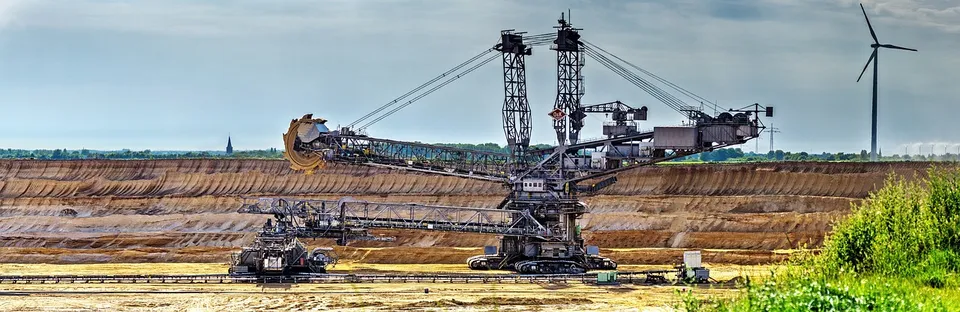
Mining employers often talk about “a job at the mine” as if it were one kind of work. It usually is not. In Minnesota, BLS data already separates surface mining machine operators from underground mining machine operators and from first-line supervisors of construction trades and extraction workers, which is a strong hint that the labor market is split by environment, responsibility, and pace rather than by a single mine badge. In iron ore, USGS also shows that the operating system includes open-pit mining plus associated concentrating and pelletizing plants, so the work is divided even before anyone talks about maintenance or contractors.
That matters because the “right fit” question changes from one work area to the next. A person who likes moving material in the pit may not enjoy the slower, more technical rhythm of a processing plant. A mechanically strong worker may be a better match for a shop or mill crew than for production hauling. A supervisor’s job is not just people management; it is coordinating production interruptions, maintenance windows, and shift handoffs. When employers blur those differences, they create hiring mistakes. When applicants blur them, they misread the job.
Four very different jobs hiding inside the same mine
| Work area | What the work is really like | What should be verified |
|---|---|---|
| Surface extraction | Haulage, loading, weather exposure, traffic patterns, and large mobile equipment. | Equipment experience, shift pattern, and surface mine orientation. |
| Processing plant | Crushing, concentrating, pelletizing, screening, instrumentation, and quality control. | Plant familiarity, reliability work, and whether the job sits in production or maintenance. |
| Maintenance shop | Alignment, bearings, drives, welding, electrical work, and troubleshooting. | Trade background, lockout-related coordination, and whether the role is fixed-site or mobile. |
| Support and supervision | Dispatch, safety, environmental work, planning, and crew coordination. | Decision-making scope, reporting lines, and whether the role spans contractors or only direct employees. |
The practical lesson is simple: a mine is not one workplace. It is several workplaces with different hazards, rhythms, and skill tests. That is why a résumé can be honest and still be incomplete. It may prove general industrial ability, but it does not yet show fit for a specific mine area.
Why training changes at the boundary of each work area
MSHA’s contractor guidance says training depends on the work being done, how long the person will be at the site, and the hazards present. It also says production operators and independent contractors share responsibility for required training. For underground mining, the rule is even more explicit: new miners with no underground experience must receive at least 40 hours of training. That is not a paperwork detail; it is a sign that mine type and task type change the standard.
This is where many outside workers misunderstand mining. A good industrial electrician, welder, or equipment operator may bring valuable experience, but MSHA’s framework makes clear that site orientation and task-specific training still matter. A contractor who has worked at ten industrial sites is not automatically ready for the eleventh if the layout, hazards, or access rules are different. In other words, completion of training in general is not the same thing as authorization for this site, this crew, and this task.
What this means for employers
For employers, the useful question is not “Do we have enough applicants?” It is “Which part of the operation needs which kind of worker?” A plant vacancy should not be filled as if it were a pit vacancy. A maintenance opening should not be treated as a generic labor opening. A supervision role should not be measured only by technical skill, because the job sits at the boundary between production goals, contractor access, maintenance timing, and safety communication. Those distinctions shape coverage, onboarding, and the amount of cross-training a crew can actually absorb.
That is also why mining employers should think in terms of progression paths. Apprenticeship programs give structure to long-training trades such as millwright and electrician work, with defined hours and related instruction, while community-college programs in northern Minnesota provide nearby routes into welding, industrial mechanical work, electrical work, diesel, engineering, and natural resources. Minnesota North College’s Manufacturing Technologies program even states that it prepares students for mining maintenance and construction maintenance, which is exactly the kind of bridge a mine crew needs when equipment grows more complex.
Why this matters in northern Minnesota
Northern Minnesota makes the issue especially visible because the region has a concentrated mining labor market, not a generic industrial one. DEED reports 4,097 mining jobs at 35 firms in Northeast Minnesota, and it has also noted that women made up only 8% of the mining workforce in 2022, which shows how narrow the talent pool still is. At the same time, Minnesota North says it serves 9,000 incumbent employees per year, which suggests that internal upgrading and retraining matter as much as first-time hiring.
That regional context changes the workforce conversation. In a place with limited labor depth, a company cannot afford to treat every opening as identical or every candidate as interchangeable. The more clearly an employer distinguishes pit, plant, shop, and support work, the easier it becomes to recruit the right person, train the right way, and keep the crew steady through outages, turnarounds, and retirements. The same is true for applicants: the more precisely you understand the work area, the better you can judge whether the job fits your skills, schedule, and long-term path.
If you are comparing a mining opening or planning a crew, start with three questions: which work area is this, what training is required for this site, and who actually has to coordinate with whom? If you want a practical next step, use the role requirements, schedule, and location to start a conversation through ironminingtalent.com/contact.html, or call 218-WorkNow, or email grandrapidsmn@expresspros.com.