
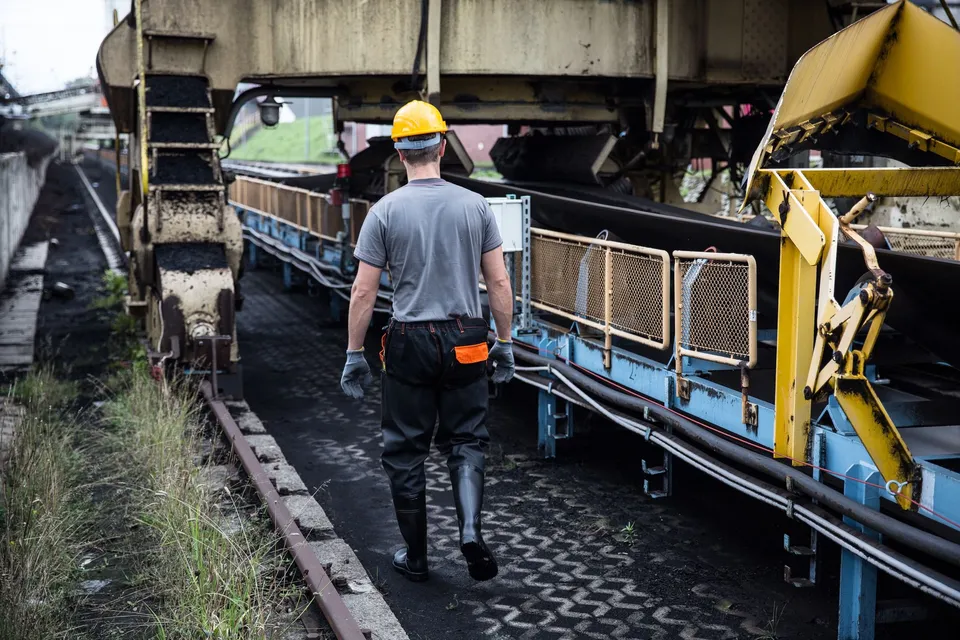
A mining maintenance career in northern Minnesota rarely starts with a single certificate and a straight climb. It usually begins with one of three things: a shop class, a community-college program, or an apprentice-style job where the worker learns on real equipment while a more experienced mechanic, electrician, or millwright checks the work. That matters because the region’s mining economy is not built around one simple job family. Northeast Minnesota still has thousands of mining jobs across a concentrated labor market, and the work includes extraction, plants, shops, controls, and contractor support rather than just truck driving or pit production.
The best entry point is usually maintenance, not only the pit
If you look closely at iron ore and taconite operations, you can see why maintenance is such a durable path. USGS reports that in 2024 eight open-pit iron ore mines in Michigan, Minnesota, and Utah shipped 98% of domestic usable iron ore products for U.S. steel consumption, and it specifically notes the associated concentration and pelletizing plants. That means the career ladder is not just about moving rock; it is also about keeping crushers, conveyors, screens, separators, motors, and transfer systems available when production needs them. A worker who understands rotating equipment, electrical controls, or fabrication can build a long career in the plant and shop side of mining, not only on the production floor.
That is why Minnesota North College’s program mix matters. Its Manufacturing Technologies diploma is a 43-credit, one-year program that includes machining, welding, fabrication, assembly, CAD/CAM, internships, and explicit preparation for mining maintenance and construction maintenance. The college also offers welding pathways at Mesabi Range-Eveleth and The Forge in Grand Rapids, with day and evening options that make it easier for working adults to stay in the region while building new skills. For many applicants, that is the practical bridge between interest and employability.
Training is cumulative, not interchangeable
One of the biggest mistakes in mining hiring is assuming that any industrial background automatically transfers. It helps, but it does not erase the difference between a general trade and a mine site. MSHA’s contractor guidance says the training needed depends on the work performed, the length of time at the site, and the hazards present. For underground mining, the law requires at least 40 hours of training for new miners without underground experience. Those facts shape how maintenance careers develop: a diploma, a welding ticket, or a strong industrial resume can get someone in the door, but site orientation, task training, and authorization still matter before the person is treated as ready for that exact job.
That layering is useful for employers too. A plant supervisor who understands the difference between training, task practice, and authorization can plan better for shutdowns, contractor-heavy work windows, and backfill during vacations or absences. It is also why a strong maintenance bench is not just a labor pool issue. It is a coverage system.
Apprenticeship explains the middle of the career path
Registered apprenticeship is the clearest national model for that middle stage. Apprenticeship.gov describes it as paid job experience combined with classroom learning and mentorship, with approval through the U.S. Department of Labor or a state apprenticeship agency. Published standards show how structured the path can be: millwright programs commonly run four years and 8,000 hours, while electrician programs also use 8,000 total hours and at least 144 hours a year of related instruction. In mining, that kind of structure fits the work well because mills, conveyors, crushers, power systems, and rotating equipment reward people who can learn methodically instead of improvising.
For applicants, the important question is not only “Can I do the work?” but “Which path matches the work I want?” A welder may move toward structural repairs, wear parts, or fabrication support. An electrician may end up in motor control, troubleshooting, or shutdown planning. A millwright may spend more time on alignment, bearings, drives, and assembly. Those are related skills, but they are not the same occupation. Minnesota’s occupational wage data make that distinction visible: first-line supervisors of construction trades and extraction workers averaged $90,290 in May 2023, while surface mining excavating and loading machine operators averaged $74,020 and underground mining machine operators averaged $74,370.
Northern Minnesota adds a few realities the classroom can’t ignore
The region’s labor market shapes career decisions. DEED says Northeast Minnesota mining employed 4,097 people at 35 firms, and another regional profile notes that women made up only 8% of the mining workforce in 2022. That tells you two things at once: the sector is large enough to support real careers, and the talent pool is still narrow enough that retention, mentoring, and advancement matter. It also helps explain why employers should care about equipment fit, onboarding quality, and whether a worksite welcomes people who are trying to build a long-term career rather than just collecting a paycheck.
The wage environment matters too, but only if you read it correctly. DEED reported a regional median hourly wage of $23.47 in early 2025 for all occupations in Northeast Minnesota, while regional mining wages were far higher than the overall baseline. That spread shows why mining can be a strong option for mechanically minded workers, but it also shows why pay alone should not be the only filter. Shift patterns, commute length, weather, and the kind of worksite you want all affect whether a role fits your life.
A practical way to choose your next step
If you are an employer, map the job as a career path: foundation skill, site orientation, supervised practice, and then independent task ownership. If you are an applicant, compare programs and openings by asking what kind of equipment, schedule, and environment you actually want to work in. A one-year manufacturing diploma, a welding program, or a registered apprenticeship can all be smart starts, but only if they lead to the kind of mine or plant work you want to do next.
If you want to compare a role, schedule, or location, call 218-WorkNow or email the office.