
When people talk about mining jobs, they usually start with pay, equipment, or training. In northern Minnesota, they should start with distance. DEED’s Northeast Minnesota profile says mining supports 4,097 jobs at 35 firms, and the same regional labor market shows how far that workforce reaches: Duluth appears as a home residence for workers with jobs in Hibbing, while St. Louis County commuting data show 78,483 workers drove alone and 10,370 carpooled. That is not a compact, walkable labor pool; it is a spread-out labor shed where the commute shapes who applies, who stays, and who drops out after a winter or two.
For employers, that changes the hiring question. The strongest offer is not only a wage rate. It is a package of shift start time, drive time, backup coverage, weather expectations, and whether the role is better suited to a nearby hire or a worker willing to relocate. In a region where so many workers drive alone, a missed shift is often a transportation problem before it is a motivation problem. If the mine or plant is counting on long-distance commuters, the schedule has to respect that reality or the turnover will show up later as absenteeism, overtime burn, and frustration at the gate.
For applicants and employees, the right question is not simply whether the work sounds good. It is whether the commute and the rotation fit the rest of life. A mining offer should be judged as a full package: base pay, overtime, shift differentials, retirement, health coverage, and whether the job is a direct employee slot or a contractor arrangement. The report notes that direct employees may receive overtime, shift differentials, retirement contributions, and health coverage, while contractors may see a higher base rate but fewer benefits and different travel treatment.
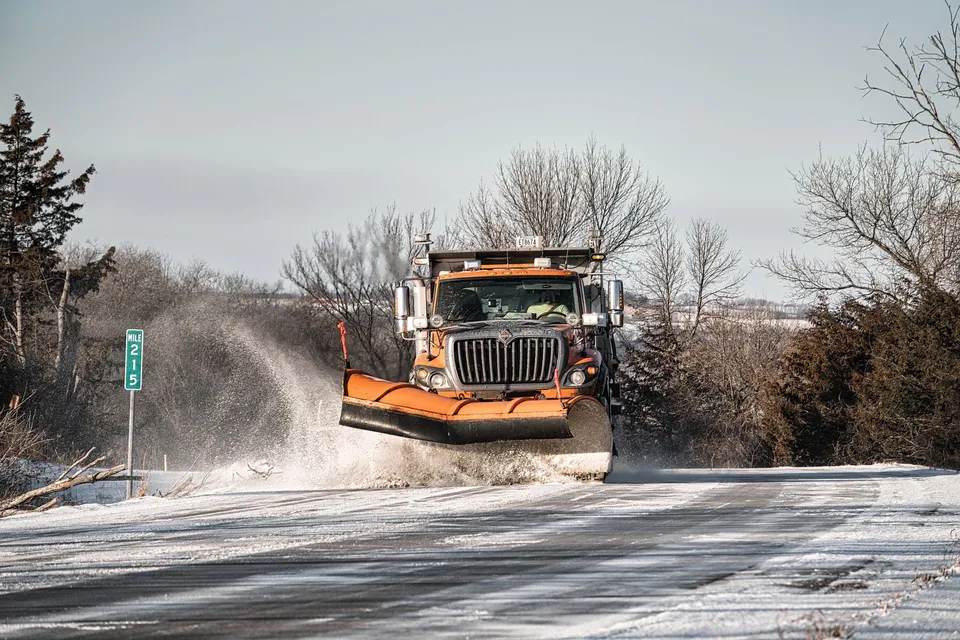
That is especially important in remote or semi-remote mining communities because a long drive narrows the margin for error. A 5 a.m. start, a snow squall, a daycare pickup, or a road closure can turn a technically good job into a hard one to keep. Employers who ignore commute burden often call it a staffing shortage. Employees often call it unsustainable. Both sides are describing the same issue from different ends of the highway.
Mining also adds a layer that many other industries do not: site-specific training and authorization. MSHA says contractor training depends on the work, the time at the site, and the hazards present, and it makes clear that production operators and contractors share responsibility for required training. For underground mining, new miners without underground experience must receive at least 40 hours of training. So even when a worker already knows heavy equipment, welding, or electrical work, that experience does not erase the need for mine-specific orientation and task training.
Northern Minnesota makes that point sharper because the region does not have an endless labor pool. The report notes that women made up only 8% of the mining workforce in 2022, and the broader region had not fully recovered its pre-pandemic labor force. For employers, that means broadening the pool matters: clearer commute expectations, more realistic shift design, and better onboarding can keep a candidate from becoming a short-term hire. For workers, it means choosing a job with full awareness of the drive, the schedule, and the training ladder ahead.
The same lesson applies beyond the Iron Range. Across U.S. mining, surface mines, underground mines, processing plants, and contractor crews all run on different rules, different training paths, and different work rhythms. Distance matters because it interacts with those differences. A worker who can handle the technical side of the job may still struggle if the schedule, road time, or site access rules do not fit real life. The best mining decisions are not made at the job-title level; they are made at the commute, shift, and site level.
If you are hiring, spell out the commute, schedule, and location before the interview becomes an offer. If you are applying, ask the same questions before you decide. For a local next step, call 218-WorkNow at 218-967-5669 or email grandrapidsmn@expresspros.com.