
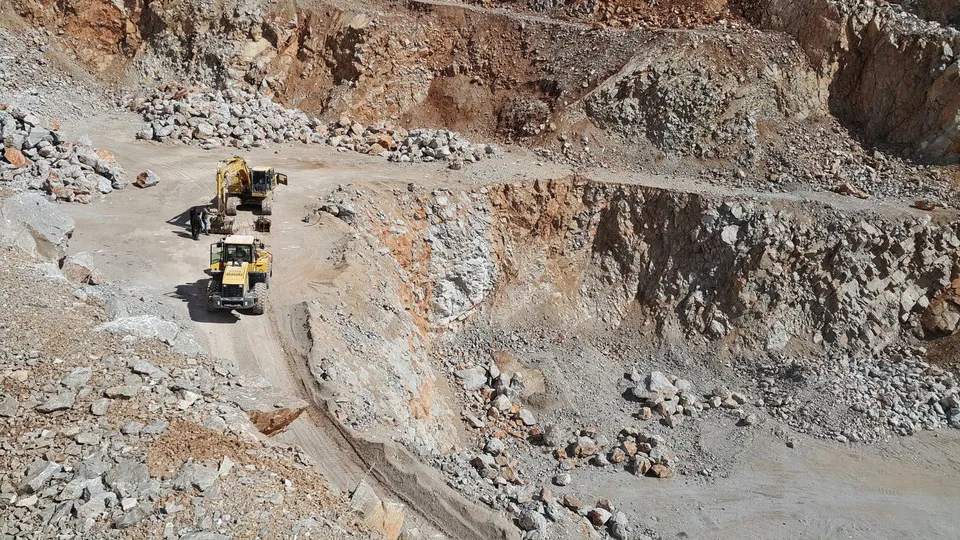
A mining job title rarely tells the whole story. One company may need people who run surface equipment, people who work at an underground face, and people who keep a plant or shop moving. The Bureau of Labor Statistics describes surface mining machine operators as workers who operate or tend machinery at surface mining sites, while continuous mining machine operators work at the mine face and load coal, metal and nonmetal ores, rock, stone, or sand onto conveyors, shuttle cars, or trucks. Those are different jobs, different rhythms, and different training needs. (bls.gov)
For employers, that distinction is not a paperwork detail. For applicants, it is the difference between a role that fits and a role that looks similar from the outside but feels very different once the shift starts.
Start with the worksite, not the headline title
A better mining posting begins by saying where the work happens: pit, plant, maintenance shop, underground section, or support yard. That matters because the work environment shapes almost everything else—who you coordinate with, how much of the day is spent around equipment, how quickly priorities can change, and which skills matter most on day one.
BLS data also show that mining careers do not sit on one ladder. Surface mining machine operators typically enter with a high school diploma or equivalent and moderate-term on-the-job training, while mining and geological engineers typically need a bachelor’s degree. In other words, “mining experience” can mean very different things depending on the job. (bls.gov)
That is why employers should resist the temptation to advertise a role as simply “general mine labor” or “all-around operator.” A posting that names the work area, the tools or systems involved, and the level of task authority is easier to fill and easier to retain.
Training is what turns a capable worker into an authorized worker
MSHA’s training rules make role clarity more than an HR preference. New miners need a full 24 hours of new miner training, and miners assigned to a new task must receive new task training. MSHA’s hazard communication rule also requires mines to identify hazardous chemicals, label containers, keep safety data sheets, and train employees on the program. That means a worker who is safe and capable in one area still may need formal orientation before stepping into another area or handling new materials. (msha.gov)
That matters in practical hiring decisions. A helper who has learned one machine or one station is not automatically ready to cover a different process just because the site is “the same mine.” Employers should spell out when the role can expand, what training comes first, and who signs off on task readiness.
For applicants, the useful question is not “Do you need mining experience?” It is: “What work will I be authorized to do in my first 30 days?” That question gets closer to the truth than a broad job title ever will.
Three questions every posting should answer
Whether you hire for production, maintenance, or processing, a stronger posting should answer these questions:
- What part of the operation is this? Surface, underground, plant, or shop.
- What training happens before solo work? New miner training, task training, or other site-specific orientation. (msha.gov)
- What is the actual day-to-day output? Running equipment, monitoring material flow, maintaining systems, documenting conditions, or supporting other crews.
Those answers help job seekers compare opportunities honestly. They also help supervisors plan coverage. A plant position may demand more process discipline. A maintenance role may demand stronger troubleshooting and coordination. A production role may demand faster reaction time and tighter handoffs with the rest of the crew.
Why this matters on the Iron Range and in northern Minnesota
This distinction is especially useful in northern Minnesota, where a single employer name may cover multiple work areas and long travel distances can make the wrong fit expensive for both sides. If you are applying from the Iron Range, ask which site you would report to, which work area you would support, and whether the role is truly plant, pit, or maintenance work. If you are hiring, make that answer easy to find before the interview.
That simple clarity reduces mismatched expectations. It also gives local applicants a fairer read on whether the job fits family schedules, commuting realities, and the kind of physical work they actually want to do.
A better interview question than “Can you do hard work?”
Ask this instead: “What would a successful first shift look like in this exact job?”
That question forces specifics. It invites the supervisor to describe pace, training, equipment, communication, and the kind of judgment the role really needs. It also tells the applicant whether the job is mostly hands-on operating, process monitoring, mechanical support, or a mix that will require deliberate cross-training.
Mining work is demanding, but it is not vague. The more clearly an employer defines the worksite and the task boundaries, the more likely the hire will last. The more clearly an applicant understands those boundaries, the better chance they have of choosing a role they can do well.
If you are sorting out a mining opening or evaluating your next move, share the role requirements, schedule, and location with Express. You can call 218-WorkNow (218-967-5669) or email grandrapidsmn@expresspros.com.