
When a mining posting says “experience required,” applicants often picture haul trucks or loaders. In iron ore and taconite, that is only part of the story. USGS says eight open-pit iron ore mines in Michigan, Minnesota, and Utah supplied 98% of domestic usable iron ore products consumed by the U.S. steel industry in 2024, and those operations included concentration and pelletizing plants. That means a large share of mining careers are built around processing, not just extraction.
Three different jobs can sit inside one mine
A pit operator, a plant operator, and a maintenance technician may all work for the same operation, but they are not doing interchangeable work. Minnesota’s occupational data separate surface mining machine operators from underground mining machine operators, and they give first-line supervisors of construction trades and extraction workers their own occupation family. In the 2023 Minnesota wage data, surface mining excavating and loading machine operators averaged $74,020 a year, underground mining machine operators averaged $74,370, and first-line supervisors averaged $90,290. That spread is a clue: the work is related, but the responsibility changes as you move from equipment operation to coordination and supervision.
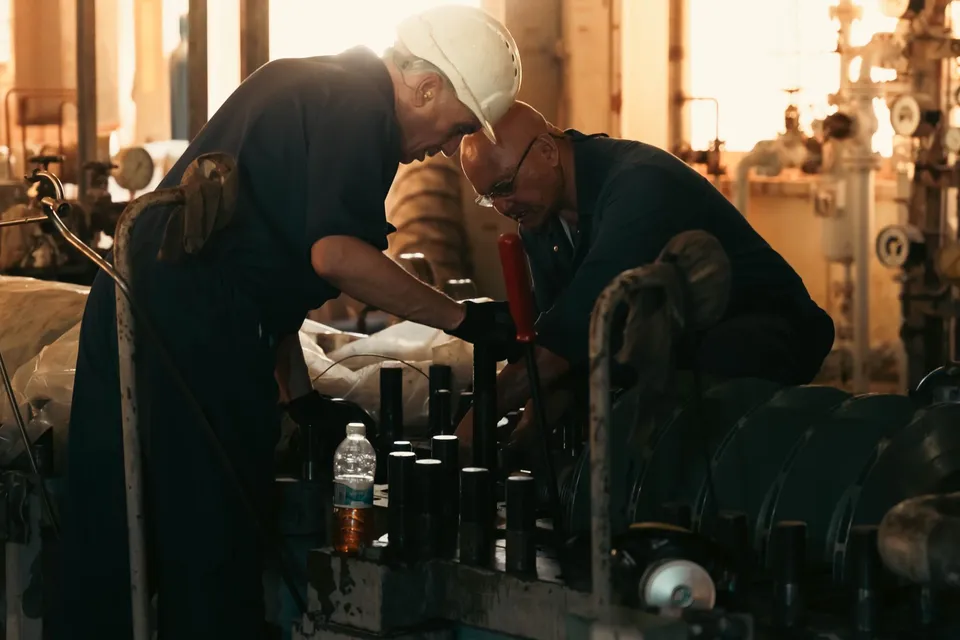
In a plant, the central question is rarely “Can you run a mine?” It is more often, “Can you keep a system moving?” Processing crews tend crushers, screens, separators, conveyor transfers, pumps, and instrumentation. Maintenance crews keep that system aligned, powered, welded, and repaired. Supervisors keep production, maintenance windows, contractor access, and shift handoffs from colliding. In other words, a processing job rewards people who understand flows, timing, and troubleshooting as much as people who understand heavy equipment.
Why employers should name the work, not just the industry
That distinction matters at hiring time. MSHA’s contractor guidance says training depends on the work performed, the length of time at the mine site, and the hazards present; it also says production operators and independent contractors share responsibility for required training. For underground mining, federal law requires at least 40 hours of training for new miners with no underground experience. Those rules show why “worked in mining” is not enough information by itself. A worker may have the right attitude and a strong industrial background and still need site-specific orientation before independent work.
For employers, the practical fix is simple: describe the work in plain language. Say whether the role is in the pit, the plant, the shop, or the control room. Say whether it is surface, underground, contractor, or direct hire. Say whether the schedule revolves around steady production or around shutdowns and maintenance windows. When a posting names the operating environment, better candidates self-select, and weaker matches step aside earlier.
That is especially important in northern Minnesota, where mining is concentrated enough that the local labor pool is real but finite. DEED’s regional profile says Northeast Minnesota had 4,097 mining jobs at 35 firms. In a market like that, employers do not just compete for “miners”; they compete for people who know a specific system, or who can learn one quickly without being misled by a generic title.
What applicants should show instead of just a title
Applicants do better when they translate experience into systems. If you worked in welding, diesel repair, industrial maintenance, electrical work, or another adjacent trade, spell out what equipment you touched and what part of the process you supported. Did you keep conveyors running? Change bearings? Troubleshoot controls? Support shutdown work? That kind of detail helps an employer see whether you belong in the plant, the shop, or the field. It also helps if you can connect your background to a structured pathway. Apprenticeship.gov describes registered apprenticeship as paid work with classroom learning, mentor support, and a recognized credential; published standards for occupations such as millwright and electrician often involve 8,000 hours of on-the-job learning plus related instruction.
That matters because plant jobs often reward long, cumulative learning. A person who knows one machine deeply may be more valuable than someone who has only sampled many sites. The best applicants do not just say they want to work in mining. They explain which system they understand, which tasks they can already handle, and where they still need site training.
The real question behind a mining application
The smartest mining question is often not “Have you worked in mining before?” It is “Which part of mining have you actually worked in?” Once that question is answered, employers can hire more accurately, and applicants can aim at the right door the first time.
If you are hiring or looking, start by matching the role to the work you actually need done. You can review the Iron Mining Talent contact page or call 218-WorkNow to talk through schedule, location, and experience fit.