
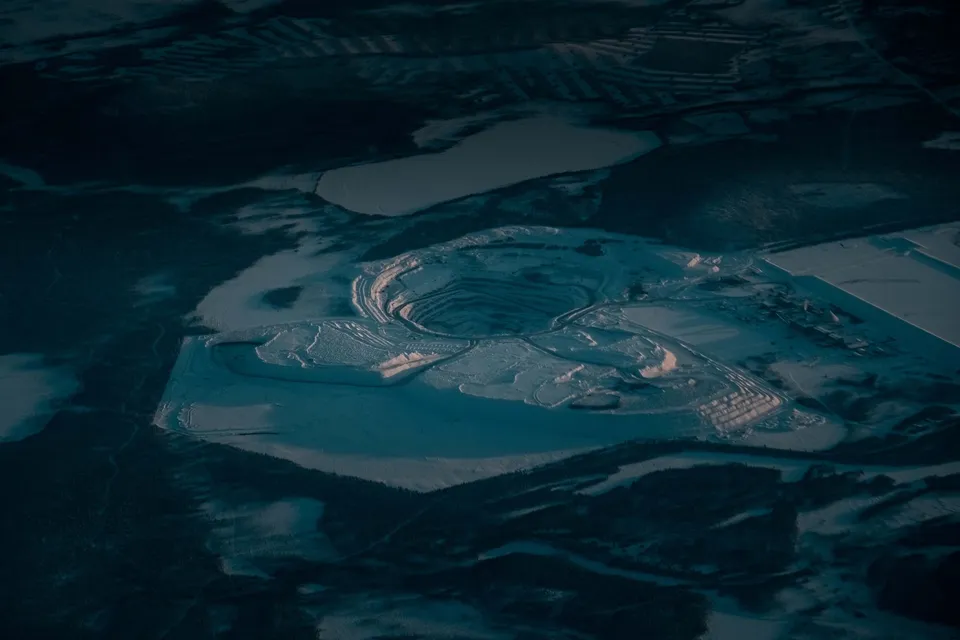
In mining, the most important minutes are often the ones before a crew ever gets production moving. A clean handoff is not a courtesy call; it is where operators, maintenance staff, contractors, and supervisors decide what is safe, what is authorized, and what can actually happen on the next shift. That matters because mining work is not one universal job. Surface operators, underground operators, plant crews, and maintenance workers face different equipment, different travel paths, and different hazards, so the handoff has to match the site and the task, not just the job title.
That is why mining employers should think of handoff quality as part of workforce design. The operational reality in mining is production-heavy and maintenance-heavy at the same time: a plant can depend on millwrights, electricians, welders, instrumentation technicians, dispatchers, and supervisors to keep material moving. The research report notes that those roles are distinct, not interchangeable, and that supervision in mining is its own coordination function because one missed sequence can stop an entire plant or mine.
The safety side is even more specific. MSHA’s contractor guidance says required training depends on the work, the length of time at the site, and the hazards present, and it says production operators and independent contractors share responsibility for that training. For underground mining, the Federal Mine Safety and Health Act requires at least 40 hours of training for new miners without underground experience. That means “experienced in industry” is not the same as “cleared for this site.” A worker may bring useful skills, but the mine still has to verify site orientation, task training, and authorization before assigning the job.
For employers, that changes what a strong handoff should contain. It should identify the work zone, the current operating status, the contractor presence, the maintenance window, and the people who are authorized to make the next decision. It should also confirm whether the next task is a production step, a repair step, or a shutdown/startup step, because those are not the same thing in mining. The report’s fatality discussion is a blunt reminder that task training failures are not paperwork errors; they can become accident causes.
For applicants and employees, the same logic turns into good questions. Ask whether the job is on the pit floor, in the plant, in maintenance, or split across all three. Ask how the site handles contractor coordination. Ask what training is site-specific and what training comes before independent work. Ask who signs off on task readiness. Those questions are not signs of hesitation; they are signs that you understand mining is a controlled environment where experience has to be matched to the actual operation.
Northern Minnesota makes the point clearly. DEED’s Northeast Minnesota profile says the region had 4,097 mining jobs at 35 firms, and its 2025 demographic spotlight said women made up 8% of the mining workforce in 2022. That small share matters because a narrow talent pool affects mentoring, equipment fit, and retention, which in turn affects who can step into shift coverage, supervision, and technical progression. In other words, workforce stability is not just about recruiting more people; it is also about making the existing workforce easier to keep, train, and advance.
That is where training pipelines become practical, not theoretical. Minnesota North College’s welding, manufacturing technologies, industrial mechanical, and electrical programs give employers and workers a clearer path into maintenance-heavy mining work, but the report is equally clear that school completion does not equal mine authorization. A person can finish a strong program and still need mine-specific orientation, task training, and sign-off before being treated as ready for a particular site assignment. For mines, that means the best hiring decision is often the one that pairs transferable skill with disciplined onboarding.
There is also a production lesson in the bigger commodity picture. USGS reported that in 2024 eight open pit iron ore mines in Michigan, Minnesota, and Utah shipped 98% of domestic usable iron ore products for U.S. steel consumption. That tells employers why handoff discipline matters: when a region sits inside a concentrated production system, a missed maintenance step or unclear shift transfer can ripple beyond one crew. The daily work may look local, but the consequences are connected to a larger operating chain.
If you manage a mine, a plant, or a contractor crew, start with the handoff: who owns the job, what changed since the last shift, what training is still needed, and what has to be signed off before work begins. If you are looking for a mining role, be ready to answer the same questions. For employers or applicants who want to talk through role requirements, schedule, and location, the next step is simple: call 218-WorkNow or email the office.