
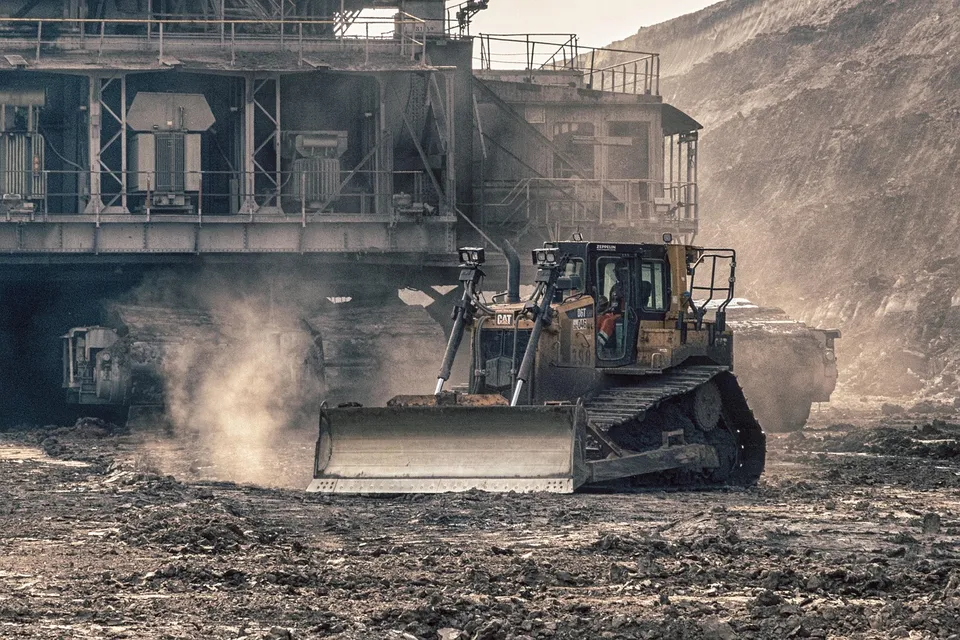
People often picture mining as a pit, a truck, or a face at the drill. In practice, the center of gravity is usually farther downstream: the plant, the shop, and the control room. That is where ore becomes product, equipment gets reset, and a broken handoff turns into a lost shift. In 2024, USGS reported that eight open-pit iron ore mines in Michigan, Minnesota, and Utah shipped 98% of domestic usable iron ore products, and that those systems are tied to concentration and pelletizing plants. That one fact changes the staffing conversation. It means processing and maintenance are not side departments; they are the part of the operation that makes extraction worth doing.
Three work worlds, not one
A mining resume can look strong and still miss the real job. Minnesota occupational data separate surface mining machine operators from underground mining machine operators, which is a reminder that the environment itself shapes the work. Surface jobs usually mean more open movement, weather exposure, and mobile equipment. Underground work compresses movement, changes ventilation and egress, and demands tighter site familiarity. A processing plant adds a different rhythm altogether: crushers, screens, separators, conveyors, instrumentation, and quality checks all have to line up before any tonnage counts as saleable output. Employers who treat those environments as interchangeable usually discover the mistake during onboarding, not after hiring.
Why maintenance is a production function
The best mine staffing plans do not put maintenance in a leftover bucket. Millwrights, industrial mechanics, electricians, welders, and instrumentation technicians keep the operation alive by aligning drives, troubleshooting controls, repairing wear points, and resetting equipment after planned or unplanned downtime. Apprenticeship pathways reflect that reality: published standards for millwright and electrician work use long, structured training arcs with thousands of hours of on-the-job learning and related instruction. In northern Minnesota, Minnesota North College’s Manufacturing Technologies diploma is a 43-credit, one-year program that explicitly prepares students for mining maintenance and construction maintenance, which is exactly the kind of pathway a plant or shop can build around.
For applicants, that means a good maintenance role is not just “can you turn a wrench?” It is “can you work around operating equipment, keep track of priorities, and move between repair, inspection, and restart without guessing?” For employers, it means the maintenance bench is part of production capacity, not an expense to trim whenever the crew looks full on paper.
Training has to match the site, the task, and the hazard
This is where mining differs sharply from many other industrial settings. MSHA says contractor training depends on the work performed, the length of time at the site, and the hazards the worker may face, and its compliance guidance says production operators and independent contractors share responsibility for required training. The Federal Mine Safety and Health Act also requires at least 40 hours of training for new underground miners without underground experience. Those rules matter because a worker can arrive with excellent trade skills and still be unready for the exact task at the exact site. MSHA’s 2023 fatality report on a telehandler accident is a blunt example: the report says the contractor did not ensure proper task training, and the worker had no mining experience.
That is why “experienced” and “site-authorized” are not the same word. A strong mine staffing process should ask three questions before a person is placed: What work will they do? How long will they be on site? What hazards and controls make this site different? The better those questions are answered up front, the fewer surprises show up in the middle of a shift.
What this means in northern Minnesota
Northern Minnesota gives this issue real-world weight. DEED’s Northeast Minnesota profile says the region had 4,097 mining jobs at 35 firms, while later regional reporting said the area’s labor force was still below its 2019 level and the mining sector lost 277 jobs in 2025. DEED also reported that women made up 8% of the mining workforce in 2022. Those numbers do not tell employers how to fill every slot, but they do explain why the local labor pool is narrow, why succession matters, and why retention is as important as recruiting. In a region where commuting and housing shape who can work where, the “middle” of the mine is also the middle of the labor market.
The practical takeaway is simple: if you are hiring, writing a job description, or choosing your next training step, start with the actual work zone, the actual shift pattern, and the actual authorization required. That is where mine staffing succeeds or fails. If you want help translating a mining role into clear requirements or a realistic job search, call 218-WorkNow or email grandrapidsmn@expresspros.com.