
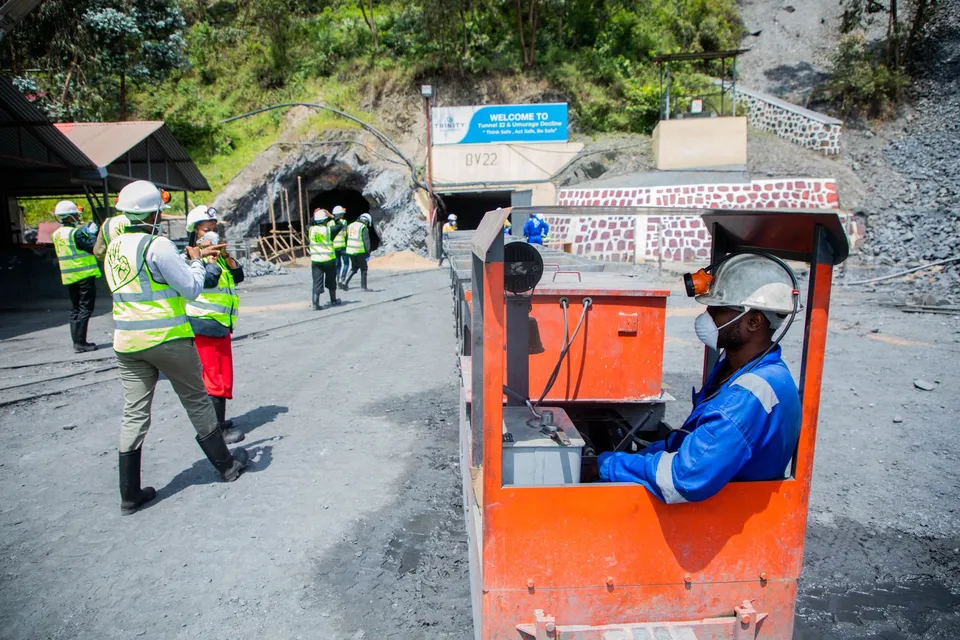
In mining, a worker can know the trade and still not be ready for the site. That is the piece many hiring conversations miss. A person may have heavy-equipment experience, electrical experience, welding skills, or years in industrial maintenance, but the mine still has to decide whether that person is trained for this exact place, this exact task, and this exact risk profile. MSHA’s guidance makes that distinction plain: training depends on the work, the time at the site, and the hazards present, and production operators and independent contractors share responsibility for getting it right .
That is why the best mining hiring question is often not “Can this candidate do the trade?” It is “Can this candidate be authorized for this site without creating a gap in safety or supervision?” In practice, that means employers should separate three ideas that often get blended together: experience, training completion, and task authorization. The first can come from many industries. The second can come from school, an apprenticeship, or another employer. The third is specific to the mine and the work being assigned .
Qualified is not the same as authorized
Mining employers tend to talk about “mine-ready” people, but the more useful test is narrower. A worker may be qualified in a general sense and still need site orientation, task-specific instruction, or supervision before starting. MSHA’s contractor guidance says workers who move from mine to mine need site orientation in addition to broader training, and the compliance guidance notes that the mine operator and contractor share responsibility for required training .
That matters because mining is multi-employer work. A plant shutdown may bring in mechanics, welders, electricians, scaffold crews, or equipment vendors who all know their craft but do not know the local traffic patterns, communication rules, isolation points, or job sequencing. In those moments, the real hiring risk is not weak résumés. It is assuming that a familiar trade automatically transfers to a mine environment.
MSHA’s underground rule shows how different the bar can be by mine type. New miners with no underground experience must receive at least 40 hours of training, while surface non-metal mines operate under a hazard-based Part 46 framework that changes with the work and exposure . That is not a paper detail. It is a reminder that the same occupation can require a very different onboarding path depending on where it is performed.
Why one telehandler accident should change how you hire
The clearest warning comes from an MSHA fatality report from 2023. MSHA said the contractor did not ensure proper task training for the telehandler operator, and the worker had no mining experience . The lesson is not that every outside hire is unsafe. The lesson is that task training is not optional decoration after the hire letter is signed.
For employers, that report argues for a more careful pre-start checklist. Before a worker reports, someone should know:
- what exact task they will perform,
- whether they are an employee or contractor,
- what site orientation they need,
- what equipment or area authorization is required, and
- who is signing off on the training record.
If those answers are unclear, the hire is not truly ready.
What employers should verify before day one
The strongest mining teams treat onboarding as an operating control, not an HR formality. That is especially true during shutdowns, restarts, and contractor-heavy work windows, when the worksite changes fast and coordination becomes more important than ever. MSHA’s guidance says the right amount of training depends on the work and hazards, which means the onboarding plan should be built around the task, not around a generic job title .
A practical hiring checklist for mines and plants is simple:
- Separate baseline experience from site-specific readiness.
- Identify which tasks require site orientation, task training, or direct supervision.
- Confirm who owns training for contractors and vendors.
- Match the schedule to the real work window, especially for shutdowns.
- Recheck authorization when the task, machine, or area changes.
This approach helps maintenance-heavy operations because maintenance is not a side function in mining; it is a production function. When a belt, crusher, mill, or haul system is down, everyone feels it. That is why the best supervisors are not just people managers. They are gatekeepers for sequencing, access, and readiness.
What applicants should ask before accepting a mine job
Applicants benefit from this same clarity. If you are moving into mining from construction, manufacturing, trucking, electrical work, or a trade program, ask direct questions before you accept an offer:
- What will my first week actually look like?
- Which tasks are covered by site orientation, and which require additional sign-off?
- Is this role employee, contractor, or temp-to-hire?
- What equipment or areas are off-limits until I am trained?
- Who will verify that I am cleared to work independently?
Those questions are not a sign of hesitation. They are a sign that you understand how mining really works. A strong resume can help you get the interview, but site-specific authorization is what gets you onto the job safely.
Why northern Minnesota makes this issue even sharper
Northern Minnesota gives this issue extra weight because the region depends on a concentrated industrial workforce. DEED’s Northeast Minnesota profile says mining accounted for 4,097 jobs at 35 firms, and the region still has not fully recovered its pre-pandemic labor force levels . That means employers are often working with a smaller pool of people who may already be stretched across multiple employers, commutes, or family obligations.
The region also needs training pathways that fit real careers, not just entry-level recruiting. Minnesota North College serves about 9,000 incumbent employees per year and offers programs in welding, manufacturing technologies, industrial mechanical technology, electrical controls and maintenance, and related fields . That matters because many mining hires in northern Minnesota are not coming from nowhere; they are upgrading from adjacent industrial work or refreshing skills for more specialized roles.
The demographic picture matters too. DEED’s 2025 spotlight said women made up 8% of the mining workforce in 2022 . That low share affects mentoring, advancement, equipment fit, and retention. In other words, readiness is not only a training question; it is also a workforce-design question. If the local labor pool is narrow, employers need clearer pathways into the work and more intentional support once people arrive.
The better hiring standard
The best mining hiring standard is not “Has this person worked hard before?” It is “Can this person be trained, documented, and authorized for this site without confusion?” That standard protects the crew, reduces avoidable delays, and gives applicants a fairer picture of the job.
For employers, that means building onboarding around the actual mine or plant. For applicants, it means asking whether the role is really ready for you, not just whether you look ready on paper.
If you want to talk through a role’s requirements, schedule, and location, start with the ironminingtalent.com contact page or call 218-WorkNow at 218-967-5669.