
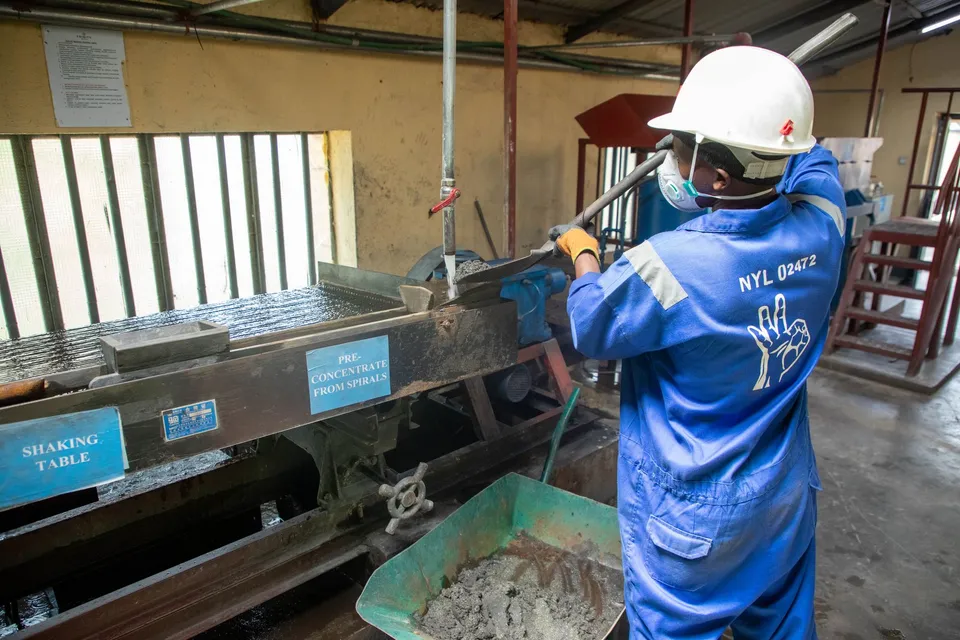
A worker can finish a welding class, earn a credential, and still be unready for the exact task waiting at a mine site. In mining, that gap matters. The industry does not reward general familiarity as much as it rewards task readiness, site authorization, and the ability to work inside a very specific operating system. MSHA’s contractor guidance says the training needed by an independent contractor depends on the work being done, how long the worker will be at the site, and the hazards present; it also says the production operator and the contractor share responsibility for training compliance.
Training is not the same as authorization
That distinction sounds simple, but it drives real hiring and supervision decisions. A person may know how to run a piece of equipment in one setting and still need site orientation, task training, and signoff before being placed in production at a mine. MSHA’s rules for surface non-metal mining and underground mining do not treat all work as interchangeable, and that is the point: the mine type, task type, and exposure level change the standard. For underground mining, the Federal Mine Safety and Health Act requires at least 40 hours of training for new miners who do not already have underground experience.
Employers should read that as an operations issue, not just an HR issue. If a site depends on haul truck drivers, millwrights, electricians, contractors, and control-room staff all moving together, then “trained somewhere else” is not enough. The site still has to verify what the worker can do here, on this equipment, under these conditions. MSHA has even documented a fatality in which a contractor did not ensure proper task training for a telehandler operator who had no mining experience, a stark reminder that familiar machinery and mine-ready work are not the same thing.
Why this matters more in mining than in many other industries
Mining is a chain of distinct jobs, not one giant occupation. A surface mine, an underground mine, a crushing plant, and a pelletizing operation may all sit inside the same broad industry, but the work looks different at each stage. USGS reported that in 2024 eight open pit iron ore mines in Michigan, Minnesota, and Utah shipped 98% of domestic usable iron ore products for consumption in the U.S. steel industry, and that the system includes associated concentrating and pelletizing plants. That matters because pit work, plant work, and maintenance work require different habits, timing, and coordination.
For applicants, the lesson is encouraging rather than limiting: adjacent experience can help, but it has to be translated into the mine’s own language. A mechanic coming from a manufacturing floor may understand bearings, gearboxes, and preventive maintenance. A commercial driver may understand heavy equipment, dispatch, and winter driving. A welder may be strong on fabrication. None of that automatically proves readiness for a specific site without the mine’s training and task authorization. That is not a lack of trust; it is how high-consequence work protects people.
What employers should look for
Mine employers often say they want experience, but the better question is: experience with what? A resume should be read for task exposure, not just titles. Did the candidate work around fixed plant equipment, mobile equipment, conveyors, electrical systems, or shutdown crews? Did they work in a surface setting or an underground one? Did they ever hold site-specific authorization, or just general trade experience? The answers tell you whether the person is ready for orientation or truly ready for independent work.
That distinction also helps with scheduling. In a shutdown or turnaround, a company may need more contractor presence, more supervision, and more re-briefing than during steady-state production. Because MSHA places shared responsibility on the operator and contractor, onboarding cannot be treated as a one-time event. It has to match the work window, the hazard profile, and the people actually on site.
What workers should ask before saying yes
Applicants can protect themselves by asking practical questions before they accept a mining job:
- What tasks am I authorized to do on day one?
- Is this surface, underground, plant, or maintenance work?
- What site-specific training comes before I touch equipment?
- Who signs off on task readiness?
- If I am a contractor, how does this site handle orientation and refresher training?
Those questions are not pushy; they are professional. They show that the worker understands the difference between background experience and job-specific responsibility.
Northern Minnesota’s version of the same question
In northeast Minnesota, the distinction matters because mining is concentrated and the labor pool is specialized. DEED says Northeast Minnesota includes Aitkin, Carlton, Cook, Itasca, Koochiching, Lake, and St. Louis counties, and that mining accounted for 4,097 jobs at 35 firms in the region. It also reported that women made up just 8% of the mining workforce in 2022, which shows how narrow the talent pipeline still is.
That is why local training pathways matter so much. Minnesota North College lists programs in welding, manufacturing technologies, industrial mechanical technology, electrical controls and maintenance, diesel mechanics and heavy equipment, engineering, and natural resource technology, and it says it serves 9,000 incumbent employees per year as a training provider. Those programs do not make someone mine-ready by themselves, but they can shorten the distance between a general trade and a specific mining assignment.
The practical takeaway is straightforward: in mining, completed training is only the beginning. The real question is whether the worker is trained for this site, this task, and this moment. If you are hiring, build your process around that question. If you are applying, ask it before you say yes. A little more precision at the front end usually saves a lot of confusion later.