
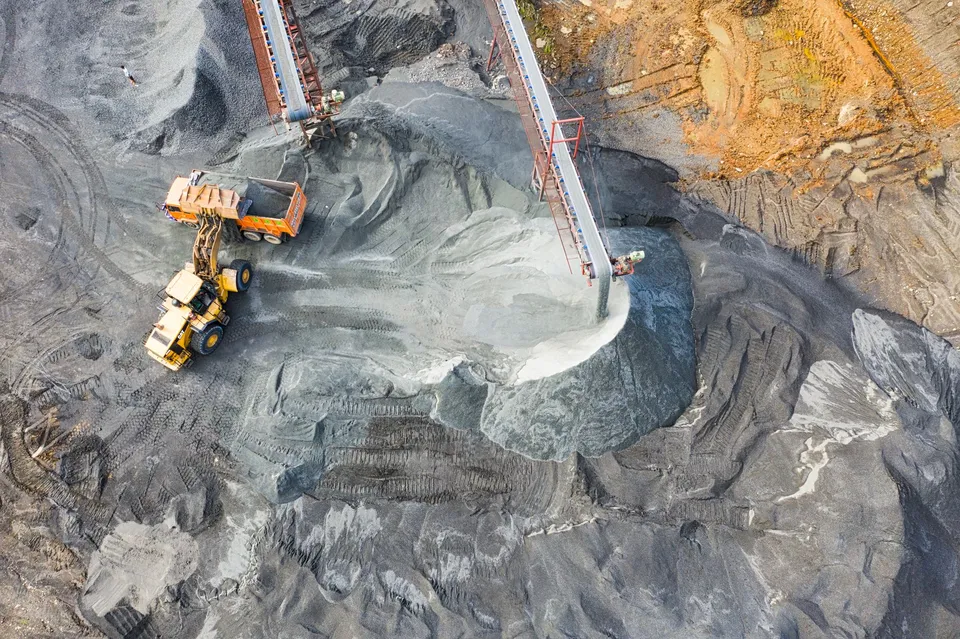
When a mine says it is hiring, the opening may be real, urgent, and well paid, and still be wrong for a worker who expects steady production when the site actually needs shutdown labor, or who brings the right trade but not the right site authorization. In mining, the hidden question is not only whether you can do the trade. It is whether the work fits the window.
USGS’s iron ore summary shows why that matters. In 2024, eight open-pit iron ore mines in Michigan, Minnesota, and Utah shipped 98% of domestic usable iron ore products, and the same system includes concentration and pelletizing plants. Read together, that means one mining company can actually be running several labor markets at once: pit crews, plant crews, maintenance crews, and support crews. USGS iron ore summary
The first filter is operating stage
A job titled maintenance, operator, or technician does not tell you enough by itself. In one place, the work may be steady-state production. In another, it may be a shutdown or turnaround. In another, it may be tied to a crusher, concentrator, or pellet plant rather than a pit. Those differences matter because they change the pace of the work, the people you coordinate with, and the way success gets measured.
That is why mining employers should name the operating stage in plain language. A posting that says only mechanic or operator leaves too much unsaid. A better posting tells applicants whether the role supports extraction, processing, or mobile equipment; whether it lives in a plant, shop, or field setting; and whether the work is part of day-to-day production or a special outage. That is not HR fluff. It is the real shape of the job.
The second filter is training and authorization
MSHA does not treat training as a one-size-fits-all formality. Its contractor guidance says training depends on the work performed, the length of time at the site, and the hazards present, and the underground training rule requires at least 40 hours of training for new miners without underground experience. MSHA contractor training guidance MSHA underground training rule
That means an experienced industrial electrician, millwright, or mechanic is not automatically ready for every mine site. The skill may transfer, but the site still has to orient the worker, verify the task, and authorize the work. MSHA’s compliance guidance also says the production operator and the independent contractor share responsibility for required training, which is why onboarding in mining is a live operational process rather than a paperwork step.
For employers, the practical lesson is simple: do not hire on title alone. Spell out what the worker must be able to do on day one, what must be learned on site, and what cannot begin until the person has completed site-specific training. For applicants, that same clarity is protection. It tells you whether your background will shorten the ramp-up or whether you are walking into a role that needs more site time than the posting suggests.
The third filter is schedule reality
Mining jobs are often compared on wage alone, but workers live on a schedule, not a pay rate. A strong hourly number can still fail a family if the shift pattern, travel time, or weekend rotation is incompatible with school pickups, elder care, or a long commute. That is especially true when the role is tied to a specific plant or a shutdown window.
A better question than Is this a mining job? is What kind of mining job is it? Ask whether the role is steady production, outage work, mobile maintenance, plant support, or contractor-based service. Ask whether the shift is fixed or rotating. Ask whether the crew changes with seasons or maintenance cycles. Those are the details that tell you whether the posting is truly workable.
Why northern Minnesota makes this sharper
Northern Minnesota gives this question extra force because the labor market is concentrated but not limitless. DEED reports 4,097 mining jobs at 35 firms in Northeast Minnesota, and it has also said the region’s labor force has not fully recovered to pre-pandemic levels. In the same region, women made up 8% of the mining workforce in 2022, a reminder that the pool of experienced candidates is smaller and narrower than many employers would like.
That is one reason training pathways matter so much here. Minnesota North College says it serves 9,000 incumbent employees per year, and its Manufacturing Technologies diploma is a 43-credit, one-year program that includes machining, welding, fabrication, assembly, CAD/CAM, internships, and preparation for mining maintenance and construction maintenance. The college’s welding programs add another route for workers who are already in adjacent trades and want to move toward plant, shop, or maintenance work. Minnesota North Manufacturing Technologies Minnesota North welding
A better way to read the next opening
If you are an employer, describe the operating stage, the shift pattern, and the site-training path before you describe the pay. If you are an applicant, share your trade background, credentials, and schedule limits before you decide the role is a fit. In mining, the right hire is not just someone who can work hard. It is someone whose experience, timing, and authorization match the actual site.
If you want help sorting a role or location, visit ironminingtalent.com/contact.html, call 218-WorkNow, or email the office.