
A strong welding ticket, a decade around heavy equipment, or years of plant maintenance can help a candidate get noticed. In mining, though, that is only the opening move. The real question is whether the person has been trained for this site, this task, and this hazard set. MSHA’s contractor guidance says required training depends on the work being done, how long the worker will be on site, and the hazards present, and the Federal Mine Safety and Health Act requires new underground miners with no underground experience to receive at least 40 hours of training. Similar experience matters, but it is not the same thing as mine authorization.
That distinction is easy to miss because mining work often looks familiar from the outside. But surface mining and underground mining are separate occupational families in BLS data, and the work environment changes how crews are trained, supervised, and moved into production. A surface operator, an underground machine operator, a millwright, and a control-room technician are not interchangeable just because they all work around industrial equipment. Mining across metals, coal, industrial minerals, aggregates, and support work is really a set of distinct labor markets tied together by shared safety demands, not one generic job family.
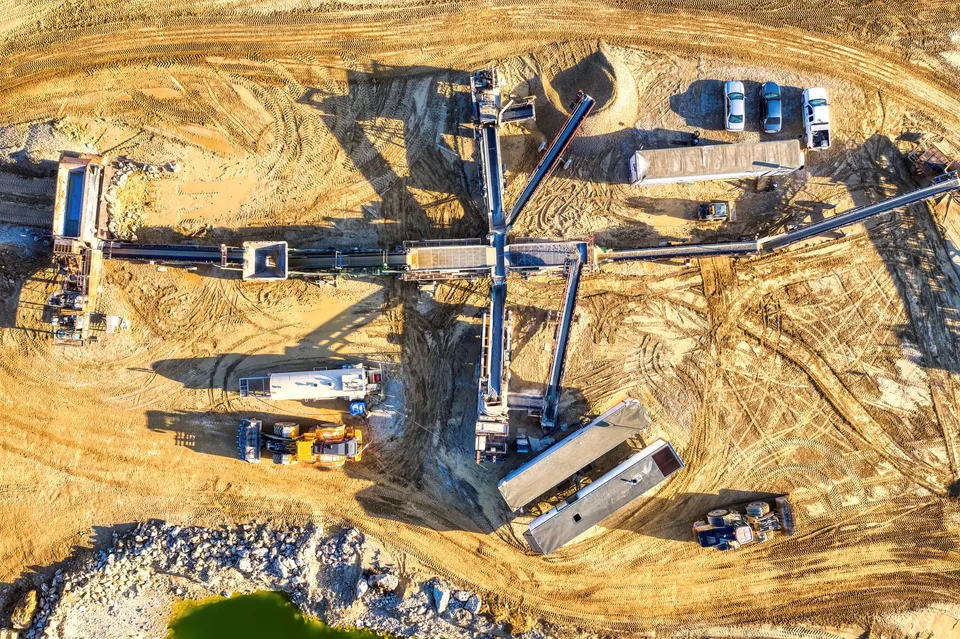
Processing makes that even clearer. In iron ore systems, extraction is only the first step. USGS reported that in 2024 eight open-pit iron ore mines in Michigan, Minnesota, and Utah shipped 98% of domestic usable iron ore products for U.S. steel consumption, and the same system includes concentration and pelletizing plants. That means the workforce is not just pit operators and truck drivers. It also includes mill operators, electricians, instrumentation technicians, and millwrights who keep crushers, screens, conveyors, drives, and controls moving. If a job ad ignores the plant side, it misses a big part of the real labor demand.
What employers should verify before day one
The first decision is employment structure. A mine operator and an independent contractor may share responsibility for training, but they do not have the same onboarding path. MSHA says contractor training depends on the work, the length of time at the site, and the hazards the worker may face. That matters most during shutdowns, rebuilds, and turnaround work, when crews change quickly and the site can fill with outside specialists. An experienced industrial electrician may still need site orientation before touching mine equipment.
The second decision is task scope. Completion of a trade program, apprenticeship, or prior plant job does not automatically equal current task authorization. MSHA’s guidance and its fatality reporting show why employers need a live checklist: Is the worker trained for the exact machine, the exact area, and the exact exposure? Has that training been documented? Has the worker been signed off for the current assignment, not just for some similar assignment elsewhere? In mining, those questions are safety controls, not paperwork.
The third decision is how to cover the work when somebody is absent. Mining operations are expensive to interrupt, and the wages reflect that specialization. In Minnesota’s May 2023 occupational data, surface mining excavating and loading machine operators averaged $74,020, underground mining machine operators averaged $74,370, and first-line supervisors of construction trades and extraction workers averaged $90,290. Those are state occupational averages, not job offers, but they explain why employers need a pipeline that can fill operator, maintenance, and supervisor gaps without lowering standards.
What applicants should ask before accepting
A mining offer is worth more when you know what the first month will actually look like. Ask which tasks are part of week one, which tasks require separate signoff, and who decides that you are ready for more responsibility. Ask whether the job is direct employment or contractor work, because pay structure, travel treatment, and benefits can differ even when the title sounds similar. Apprenticeship.gov describes registered apprenticeship as paid work with classroom learning, mentorship, and a portable credential, but it also notes that candidates apply directly to the employer or sponsor. In other words, the path is structured, but it is still employer-driven.
For people coming from welding, construction, trucking, diesel repair, or industrial maintenance, that question set is especially important. Transferable experience is valuable. It just needs to be matched to the mine’s actual hazards, equipment, and site rules. A worker who asks for that clarity is not being difficult; they are reducing the chance of a bad fit, a rushed assignment, or a training gap that becomes a safety problem later. That is as much an employee-quality issue as it is an employer-quality issue.
Why northern Minnesota makes this concrete
Northern Minnesota shows the point in a very practical way. DEED’s Northeast Minnesota regional profile says the area spans Aitkin, Carlton, Cook, Itasca, Koochiching, Lake, and St. Louis counties, and the region had 4,097 mining jobs at 35 firms. DEED also reported that the region’s labor force was still below its pre-pandemic level, which means employers cannot assume the local labor pool will instantly expand when a project ramps up. In a tight market, the quality of onboarding matters as much as the size of the posting list.
The region also has a training pipeline that shows how mining work is actually built. Minnesota North College lists Welding, Manufacturing Technologies, Electrical Controls & Maintenance, Electrical Maintenance & Construction, Diesel Mechanics & Heavy Equipment, Engineering, and Natural Resource Technology among its programs. Its welding pathway includes a 33-credit entry-level diploma and a 32-credit advanced option, while Manufacturing Technologies is a 43-credit one-year program with machining, welding, fabrication, assembly, CAD/CAM, internships, and explicit preparation for mining maintenance and construction maintenance. The college also says it serves 9,000 incumbent employees per year, which is a reminder that many mining careers advance through skill upgrades rather than a straight line from school to final job.
There is also a workforce-composition angle that employers should not ignore. DEED’s 2025 demographic spotlight said women made up 8% of the mining workforce in 2022. That does not tell a complete story about culture, access, or retention, but it does show that the talent pool is narrower than many employers would like. If a mine wants more skilled people to stay, it has to make room for training, progression, and respect, not just recruiting slogans.
A practical next step
If you are an employer, map the first 30 days of the job before you post it. If you are an applicant, bring your exact credentials and ask what still needs site-specific training. That simple conversation often reveals whether the role is truly a fit. For help comparing a role to your background, call 218-WorkNow or email the office.