
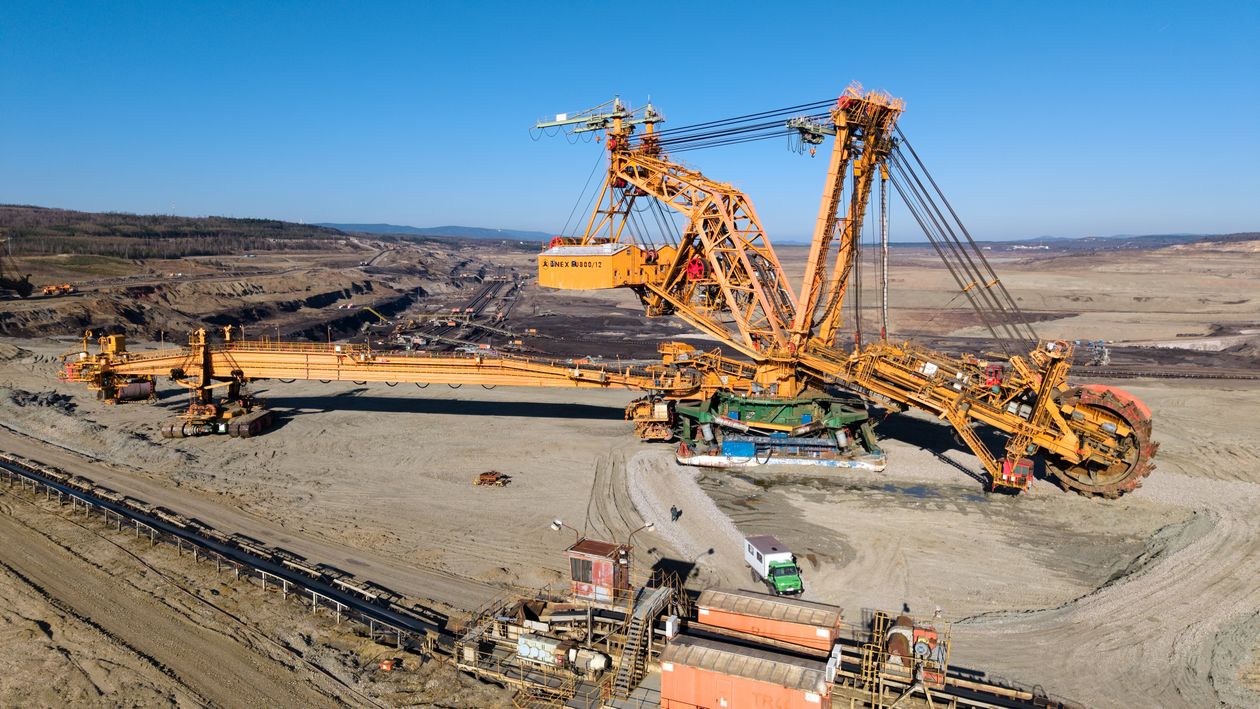
Mining employment on Minnesota’s Iron Range can change sharply when market conditions, plant decisions, maintenance schedules or major projects shift. That volatility creates a recruiting problem: the moment with the most available workers is not always the moment an employer needs to hire.
Understand the employment cycle
Minnesota DEED reported that Northeast Minnesota mining employment increased in 2024 to 4,227 jobs with an average annual wage of about $114,868. The picture changed in 2025. DEED’s June 2026 regional report says mining had the largest employment decline in Northeast Minnesota that year, losing 277 jobs, or 6.6%, with significant layoffs early in the year. Other reporting has documented workers leaving the Iron Range for jobs in other states after extended layoffs. The important workforce lesson is that a laid-off skilled worker does not necessarily remain locally available until the next restart.
When demand falls, experienced mechanics, operators and maintenance employees may move into manufacturing, construction, utilities, transportation, heavy equipment service or other industries. Some relocate. Others use the interruption to pursue training or a different schedule. By the time a mine, contractor or supplier needs to staff up, a portion of the previous workforce may no longer be reachable.
Maintain a talent network between hiring surges
Employers can reduce this whiplash by maintaining a talent network during slower periods. Keep records of qualified former applicants, strong seasonal employees, retirees interested in limited work, contractors, and workers who left in good standing. Periodic, respectful contact is more effective than rebuilding the list after a restart announcement.
Cross-industry recruiting is also important. Industrial mechanical skills exist throughout northern Minnesota. Minnesota North College trains millwrights and maintenance mechanics for mining and other processing and manufacturing environments. Its electrical-controls programs also serve industries such as mining, utilities, manufacturing and transportation. When hiring increases, employers should search by systems and skills—not just by prior mine employer.
Plan staffing scenarios and protect site knowledge
Scenario planning helps determine how large that network should be. An employer can outline three staffing cases: normal attrition, a project or maintenance surge, and a larger restart or expansion. For each case, identify the roles with the longest lead time. Specialized electrical, controls, millwright, HVAC-R, heavy-equipment and licensed driving positions may require earlier recruiting than general labor.
Employers should also identify which knowledge is difficult to replace. A veteran employee may understand a specific plant system, maintenance history or local operating practice that is not captured in a job title. Cross-training, documentation and pairing newer employees with experienced workers can reduce the operational risk when turnover and market cycles occur at the same time.
Communicate through contraction and growth
Communication matters during both contraction and growth. Workers remember how employers handle uncertain periods. Clear information about temporary assignments, expected duration, recall possibilities and transferable opportunities can preserve relationships even when permanent work is not available.
A staffing company can support this approach by staying connected with candidates across employers and industries. That is particularly valuable in a smaller regional labor market where the same skilled person may be relevant to a mine, a contractor, a manufacturer and an equipment service company.
Mining cycles cannot be eliminated. The workforce consequences can be managed better by treating candidate relationships as a long-term asset rather than a list created only when production demand changes.